



The Power of the Pause: Why White Space is Your Most Effective Sales Tool
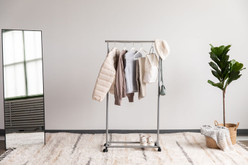
In the competitive world of retail, there is a common impulse to fill every square inch of a store with merchandise. The logic seems sound: If it isn’t on the floor, I can’t sell it. However, the world’s most successful retail environments—from high-end galleries to flagship tech stores—operate on the opposite principle. They embrace White Space (also known as negative space). In design, white space isn’t "empty" space; it is a functional tool that directs the customer’s eye, defines your brand’s value, and ultimately drives sales.
Here is why "doing nothing" with certain areas of your store is a high-level strategic move.
1. The Psychology of Perceived Value
There is an inverse relationship between product density and price point.
-
High-density displays (cramped shelves and overflowing bins) signal "bargain" and "discount." They trigger a "hunter" mindset in customers looking for a deal.
-
Low-density displays (generous space around a single item) signal "luxury," "quality," and "exclusivity."
By giving a product physical room to breathe, you are non-verbally telling the customer that the item is important enough to deserve its own stage. Space acts as a silent frame that justifies a higher price tag.
2. Eliminating "Visual Noise" and Decision Fatigue
When a customer walks into a store where every wall is packed with inventory, their brain experiences Cognitive Overload. When everything is competing for attention, nothing wins.
White space provides "visual rest." It allows the brain to process information in manageable chunks. By creating a layout with clear breaks, you reduce the stress of shopping. A relaxed customer stays in the store longer, and a customer who stays longer is significantly more likely to make a purchase.
3. Creating a "Hero" Through Contrast
In any collection, you have "Hero" products—the items that define your season or offer the best margins. If these items are nestled tightly among standard inventory, they disappear.
White space acts like a spotlight. By intentionally leaving the area around a specific display clear, you create a natural focal point. You don’t need a flashing sign to tell a customer where to look; the absence of "clutter" around a hero product will naturally draw their eyes toward it.
4. Directing the Customer Journey
White space isn’t just about the shelves; it’s about the floor. Strategic gaps in your layout create "sightlines." When a customer can see a clear path to the back of the store—or see a beautifully curated display from across the room—they are encouraged to explore.
If your store feels like a labyrinth of products, customers may feel trapped or overwhelmed and stick only to the entrance. This also makes it so hard to feature anything in your store. Open space creates an inviting atmosphere that encourages "dwell time."
How to Master the Balance
Embracing white space doesn’t mean you have to cut your inventory in half. It’s about Visual Hierarchy.
-
The 80/20 Rule: Dedicate 80% of your store to efficient, high-capacity storage for your staples, but reserve 20% of your most visible areas for "low-density" storytelling.
-
Vary Your Heights: Use different levels for your displays. Creating "air" between the top of a product and the shelf above it prevents a "walled-in" feeling.
-
Respect the "Landing Zone": Leave the first few feet of your store entrance relatively open. This allows customers to transition from the busy outside world and take a "visual breath" before they start shopping.
The Bottom Line
In retail design, White Space gives Focus. It is the difference between a store that feels like a warehouse and a store that feels like a destination. By allowing your merchandise to breathe, you aren't wasting space—you are investing in the customer’s ability to see, appreciate, and buy your products.
Here's some points to consider when doing your own "White Space Audit":
1. The Store Entrance (The Decompression Zone)
The first 5–10 feet of your store is where customers transition from the "outside world" to your brand.
-
Before: Racks and bins are placed right at the door to catch people immediately. It feels "hectic" and crowded.
-
After: A clear, open path. The first few feet are intentionally empty, allowing the customer to take a "visual breath" and scan the entire store layout.
-
The Goal: Lower the customer's heart rate and invite them deeper into the space.
2. Product Grouping (The "Hero" vs. The "Staple")
If every product is screaming for attention, the customer hears nothing but noise.
-
Before: Every shelf is packed edge-to-edge. "Hero" items (new arrivals/high-margin) are indistinguishable from basic stock.
-
After: "Staples" are organized efficiently, but "Hero" items are given 20–30% more physical space. A single item might sit alone on a shelf or be centered on a display arm.
-
The Goal: Use space to tell the customer exactly what the most important item in the room is.
3. Vertical Space (Breathing Room)
Walls are the most valuable real estate in a store. Don't suffocate them.
-
Before: Merchandise goes from the floor to the ceiling with no gaps. It feels "walled-in" and heavy.
-
After: At least 12–18 inches of "air" is left between the top of the product and the next shelf. Different hanging heights are used to create a rhythmic, staggered look.
-
The Goal: Create a sense of lightness and architectural "flow" that makes the store feel larger.
4. Sightlines (The "Horizon" Test)
Can a customer see a reason to walk to the back of your store?
-
Before: High floor fixtures block the view of the back wall. The store feels like a labyrinth or a storage unit. Consdier the traingle effect, the store rises before the customer from front to back. It is inplrtant to have a focal point at the high point ot the sighlint, twoards the back of the sotre. Nowadays, that focus is ofetn a sceen with moving graphics or brand features.
-
After: Fixtures are height-graduated (lower in the front/center, taller toward the perimeter). Clear "windows" of empty space allow customers to see curated "destination" displays in the distance.
-
The Goal: Increase "dwell time" by making the entire floor feel accessible and inviting.
The "Quick Scan" Audit
Stand in the center of the store and ask these three questions:
-
Does my eye have a place to rest? (If no, you need more white space.)
-
Can I see something I'm insterested in within 5 seconds? (If no, your "Hero" products are buried.)
-
Would a customer with a stroller or shopping bag feel comfortable turning around? (If no, your floor flow is too tight.)