




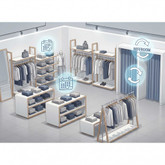
The Boredom Barrier: Is Your Store Moving as Fast as Your Customers?
In the competitive world of retail, the most dangerous thing your store can become is "familiar." Learn how to break the cycle by re-merchandising to your customer’s visit frequency.
When a customer enters your space, their brain is scanning for what is new, different, or relevant. If your layout remains static for too long, a psychological phenomenon called Inattentional Blindness kicks in. The customer "sees" the shelves, but they stop "looking" at the products.
The secret to breaking this barrier? Time your re-merchandising to your customer’s visit frequency.
The Visit Frequency Formula
How often should you move your merchandise? The answer depends entirely on your "regulars." Use this guide to plan your next store refresh.
| Average Customer Visit | Re-merchandise Frequency | The Strategy |
|---|---|---|
| Weekly (e.g., Grocery, Consumables) | Every 7–10 Days | Move high-impulse items or "end-caps" frequently to suggest fresh arrivals. |
| Monthly (e.g., Fashion, Gifts, Hobby) | Every 4 Weeks | Perform a "Major Flip." Move entire categories to different walls to force a new walking path. |
| Quarterly (e.g., Furniture, Specialty) | Every 8–12 Weeks | Focus on "Lifestyle Storytelling." Change the vignettes and central displays to reflect the coming season. |
1. Break the "Muscle Memory"
Repeat customers often develop "muscle memory." They walk the same path to the same section every time. By shifting your key displays to match their visit cycle, you disrupt that path. This "speed bump" forces them to look at merchandise they’ve been walking past for months.
2. The "Freshness" Illusion
You don’t always need new products to make a store feel "new." Moving an older item from a bottom shelf to eye level—or from the back of the store to a front "Power Table"—can often trigger a sale. To the customer who hasn't seen it in that light before, it is new.
3. Micro-Moves vs. Macro-Moves
Re-merchandising doesn't have to be an all-nighter. Small changes can have big impacts:
- Micro-Moves (Weekly): Change the "Face-out" item on a rack or swap the items on your checkout counter.
- Macro-Moves (Monthly/Seasonal): Swap the left side of the store with the right side. Change the focal point visible from the front window.
4. Signal Health and Vitality
A store that changes is a store that is "alive." Movement signals to your community that business is good, stock is turning over, and there is always a reason to "just pop in" and see what’s happened since last week.
The "30-Day Rule" Challenge
If a product has sat in the exact same spot for 30 days without selling, it’s no longer a product—it’s a permanent fixture. Move it, kit it, or discount it. Space is your most expensive asset. Don't let a slow-moving item "rent" your best real estate for free just because it’s always been there.